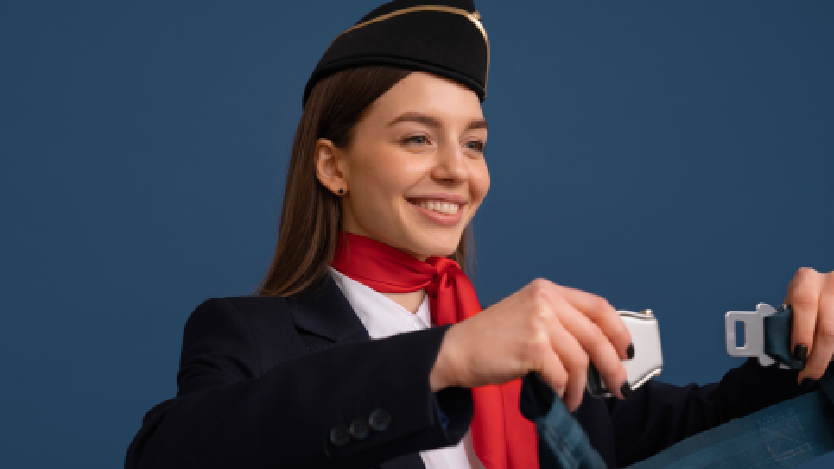
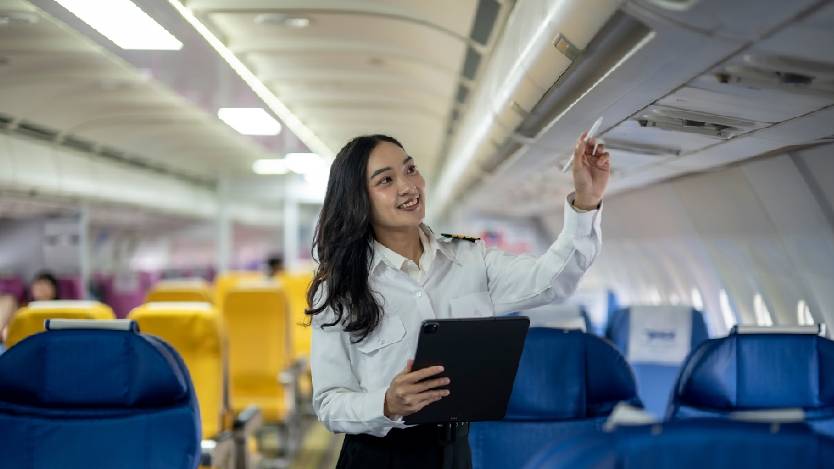
A cabin crew training institute teaches emergency handling, passenger communication, grooming, confidence building, and airline interview preparation alongside aviation safety procedures.
The aviation industry looks glamorous from the outside.
Perfect uniforms, confident smiles, smooth announcements, and international travel often become the first things people notice.
But inside a professional cabin crew classroom, the reality is very different. Behind every polished flight attendant stands months of disciplined preparation, crisis training, communication practice, and mental conditioning.
At an air hostess training centre in Delhi, students are trained far beyond appearance and etiquette. The real focus stays on safety, passenger handling, emotional control, and operational professionalism.
At Fly Wings, we prepare students for situations airlines actually test during interviews and inflight assessments. Some lessons are technical. Some are psychological. And a few are the kind of industry secrets students only understand once training begins.
Why Cabin Crew Training Is More Intensive Than Most Students Expect
Many students walk into aviation institutes assuming cabin crew work is mainly customer service. Within the first few weeks, they discover how demanding the profession truly is. Airlines expect crew members to stay alert for long hours, manage emergencies calmly, and maintain professionalism even during difficult passenger situations.
A structured air hostess course in Delhi usually combines personality development with aviation-specific operational learning. The training environment itself is designed to simulate airline standards from day one.
The Hidden Skills Airlines Quietly Evaluate
Cabin crew interviews are not only about English speaking or grooming. Recruiters observe many subtle qualities that students often overlook.
| Skill Airlines Observe | Why It Matters |
| Situational awareness | Helps manage emergencies quickly |
| Emotional stability | Important during passenger conflicts |
| Voice clarity | Needed for announcements and communication |
| Team coordination | Cabin crew work in synchronized teams |
| Professional posture | Reflects airline brand image |
| Reaction speed | Essential during onboard incidents |
This is why practical sessions matter more than memorized answers. At Fly Wings, we repeatedly train students under pressure because airline environments rarely remain predictable.
Secrets Cabin Crew Students Learn During Professional Training
Aviation institutes teach many techniques that are rarely discussed publicly. These small details often separate selected candidates from rejected ones.
The “Calm Face” Technique
Passengers look at cabin crew reactions during turbulence, delays, or emergencies. If crew members panic, passengers panic faster. One of the first habits students learn is emotional masking. Even under pressure, expressions, tone, and body language must remain controlled.
This sounds simple until students practice it during simulated emergency drills.
Why Grooming Is Actually About Discipline
Uniform standards in aviation are not only about beauty or fashion. Airlines use grooming standards to measure consistency, discipline, and attention to detail. A misplaced scarf, untidy hair bun, or improper posture signals lack of preparation.
That is why the best air hostess training centre in Delhi spends significant classroom hours on grooming routines, posture correction, and professional presentation.
The Science Behind Cabin Crew Communication
Passengers onboard come from different age groups, cultures, and emotional states. Cabin crew members are trained to adjust tone depending on the situation.
For example:
- A nervous first-time flyer needs reassurance
- An angry passenger needs calm authority
- Elderly travelers require patience and clarity
- Children respond better to friendly conversational tones
Communication training becomes highly practical rather than theoretical.
Emergency Training Is The Most Serious Part Of Aviation Classes
Most students are surprised when they realize emergency response training occupies a major part of cabin crew preparation.
Situations Students Practice Repeatedly
Cabin crew trainees are taught to respond quickly in scenarios such as:
- Smoke inside aircraft cabins
- Medical emergencies
- Emergency landings
- Passenger evacuation
- Fire containment
- Water landing procedures
- Unruly passenger situations
Airlines worldwide follow strict safety regulations guided by aviation authorities. Cabin crew members act as first responders inside an aircraft until external help becomes available.
At Fly Wings, we believe confidence develops only through repetition. That is why students repeatedly perform drills until reactions become natural.
Personality Transformation Happens Quietly During Training
One of the biggest changes students experience is personal confidence. Many aviation aspirants join with hesitation, stage fear, or communication anxiety. Slowly, the training atmosphere reshapes their personality.
Confidence Is Built Through Daily Practice
Professional aviation training often includes:
- Mock interviews
- Group discussions
- Public speaking sessions
- Personality development workshops
- Passenger interaction roleplays
These sessions gradually help students speak with authority and clarity.
Interestingly, many recruiters value confidence more than perfect grammar. Airlines prefer candidates who can manage real-world situations calmly instead of sounding rehearsed.
Many students also spend time understanding what airlines actually expect from fresh candidates, especially while comparing reputed cabin crew institutes and training environments before making a career decision.
What Makes Professional Aviation Training Different
Not every institute follows airline-oriented preparation methods. The best training centre for air hostess training in Delhi focuses on industry simulation rather than textbook-only learning.
Important Features Students Should Look For
| Training Area | Why It Matters |
| Mock cabin setup | Creates real airline environment |
| Interview preparation | Improves airline selection chances |
| Grooming labs | Builds professional presentation |
| Communication training | Enhances passenger handling |
| Personality development | Builds confidence |
| Safety drills | Prepares for emergency response |
Aviation is one of those industries where practical exposure matters heavily. Students learn faster when they experience realistic training conditions instead of only classroom lectures.
Cabin Crew Careers Are About Responsibility First
Social media often highlights travel benefits and glamorous lifestyles. The profession certainly offers exciting opportunities, but airlines hire cabin crew primarily for safety responsibilities.
During flights, cabin crew members monitor passenger behavior, identify safety risks, coordinate with pilots, manage onboard service, and respond during emergencies. Training centres prepare students for this responsibility long before they attend airline interviews.
At Fly Wings, we constantly remind students that professionalism is not built overnight. It develops through consistency, discipline, and repeated practice.
Conclusion
Aviation training reveals a side of cabin crew careers many people never see. Beyond smiles and uniforms lies serious preparation involving safety management, communication psychology, emergency handling, and emotional discipline. A professional air hostess training centre in Delhi helps students understand these realities while preparing them for airline expectations in practical ways.
At Fly Wings, we focus on industry-ready preparation that goes beyond theory. Whether students want cabin crew opportunities or wish to explore aviation operations and understand ground staff course fees in Delhi, proper training becomes the foundation of long-term success in the airline industry.
Also Read:-
Can Customer Service Training In Gurgaon Help You Switch Careers Successfully?
Air Hostess Course In Gurgaon: Eligibility, Training Modules, And Career Scope Explained
More Useful Links:-
Customer Service Training In Gurgaon | Air Hostess Institute In Delhi | Air Hostess Training Institute
FAQs
Q. What practical skills are taught during cabin crew training?
Cabin crew students learn emergency handling, passenger communication, grooming standards, inflight service procedures, safety drills, and interview preparation. Training also includes personality development, confidence building, and real-world aviation simulations that help students prepare for airline working environments professionally.
Q. Why is emergency training important for cabin crew students?
Emergency training prepares cabin crew members to respond quickly during medical situations, turbulence, fire incidents, evacuations, and passenger emergencies. Airlines prioritize safety responsibilities heavily, which is why aviation institutes conduct repeated practical drills to improve reaction time, coordination, and calm decision-making under pressure.
Q. How does grooming training help cabin crew aspirants?
Grooming sessions help students understand airline presentation standards, professional posture, hygiene, uniform discipline, and body language. Airlines observe these details carefully during recruitment because they reflect professionalism, confidence, consistency, and the ability to represent the airline brand properly during passenger interactions.
Q. What makes aviation training institutes different from regular courses?
Professional aviation institutes combine classroom learning with practical simulations, mock interviews, communication exercises, safety drills, and personality development. This industry-oriented approach helps students adapt to real airline expectations instead of relying only on theoretical aviation knowledge or basic customer service lessons.