
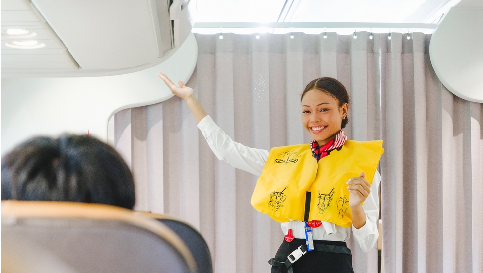
Every year, we meet students who walk into Fly Wings with the same quiet question in their eyes.
Can I really do this? Can I become a cabin crew member?
The uniform attracts attention. The travel sounds exciting. But beneath the glamour sits discipline, training, and responsibility. Choosing an air hostess course in Gurgaon is not about learning how to smile on board. It is about preparing for an aviation career that demands awareness, safety knowledge, and emotional strength.
Let us break it down properly. No myths. No exaggerated promises. Just clarity.
Who Is Eligible For An Air Hostess Course?
Airlines follow basic eligibility standards across India. While exact requirements vary slightly between carriers, most look for:
- Minimum qualification: 10+2 from a recognized board
- Age range: Generally 18 to 26 years for entry-level cabin crew roles
- Good health and vision standards
- Clear communication skills in English and Hindi
- Professional grooming and a confident personality
Height requirements may apply depending on airline guidelines. These are usually related to safety reach standards inside aircraft cabins.
At Fly Wings, we assess not only eligibility but readiness. An academic qualification opens the door. Personality and discipline help you step through it.
What You Actually Learn During Training
Many students assume cabin crew training is only about presentation. That assumption fades quickly.
As an aviation institute in Gurgaon, we design our modules to reflect real airline expectations. Cabin crew are safety professionals first. Service ambassadors second.
Here is how structured training usually unfolds:
1. Aviation Fundamentals
- Introduction to airline operations
- Aircraft familiarization
- Roles and responsibilities of cabin crew
Students understand how their work fits into the larger aviation ecosystem.
2. Safety and Emergency Procedures
This is the backbone of training.
- Emergency evacuation drills
- Fire-fighting basics
- First aid and CPR fundamentals
- Ditching and water survival awareness
Cabin crew are trained to lead passengers during emergencies. Calm authority saves lives.
3. Grooming and Professional Etiquette
Uniform standards are strict. Airlines monitor appearance closely.
- Personal grooming
- Body language
- Voice modulation
- Cultural sensitivity
Confidence grows through repetition.
4. Passenger Handling and Service Skills
Cabins can be unpredictable. A crying infant. A medical concern. A delayed takeoff. We simulate these situations. Students practise responses until reactions feel natural.
Here is a simple comparison to understand the training balance:
| Module Type | Focus Area | Why It Matters |
| Safety Training | Emergency response | Passenger protection |
| Communication | Clarity and tone | Professional image |
| Grooming | Presentation | Airline compliance |
| Passenger Service | Conflict handling | Customer satisfaction |
A serious aviation institute in Gurgaon never treats safety training as secondary. It remains central.
Duration and Structure of the Course
Most air hostess programs range from six months to one year, depending on depth and specialization.
At Fly Wings, we combine:
- Classroom instruction
- Practical drills
- Mock airline interviews
- Personality development sessions
Learning in aviation must feel active. Passive listening does not build confidence.
Career Scope After Completion
Cabin crew careers begin at the entry level, but growth is steady for disciplined professionals.
After completing an air hostess course in Gurgaon, students may explore:
- Domestic airline cabin crew roles
- International airline opportunities after experience
- Corporate aviation cabin crew
- Ground-based airline service positions
With time and performance consistency, promotion to senior cabin crew or lead cabin attendant becomes possible.
Airlines reward reliability. Attendance matters. Conduct matters. Teamwork matters.
Beyond Cabin Crew: Expanding Aviation Careers
Some students discover new interests during training. Aviation offers multiple paths.
For instance:
- Airport ground operations
- Customer service management
- In-flight training coordination
- Even academic progression toward roles such as certified flight instructor in Gurgaon for those pursuing advanced aviation qualifications later in their journey
Aviation is wider than it first appears.
Why Training Quality Matters
Not every program prepares students equally.
When selecting an institute, ask practical questions:
- Are emergency drills demonstrated physically?
- Are interview simulations conducted regularly?
- Is grooming feedback detailed and individual?
- Are trainers experienced in aviation environments?
At Fly Wings, we believe clarity builds confidence. Students deserve realistic expectations, not marketing exaggeration.
The aviation industry is structured. It rewards preparation. It notices discipline.
Is This Career Right For You?
Choosing an air hostess course in Gurgaon is a serious step. It demands effort. It demands emotional maturity. It demands patience.
But for those who enjoy interacting with people, handling responsibility, and working in dynamic environments, it can be deeply fulfilling.
At Fly Wings, we guide students from eligibility assessment to interview readiness with structured, honest training. Aviation careers are built on discipline, not shortcuts.
The journey begins in the classroom. The sky comes later.
Also Read:-
Customer Experience Careers: Why Customer Service Training In Gurgaon Opens Global Opportunities
Can Customer Service Training In Gurgaon Help You Switch Careers Successfully?
More Useful Links:-
Cabin Crew Training Institute | Best Air Hostess Training Institute In Delhi | Certified Flight Instructor In Gurgaon
FAQs
Q. What is the minimum qualification required for an air hostess course?
Most institutes and airlines require candidates to have completed 10+2 from a recognized board. Strong communication skills, good health, and professional grooming standards are equally important for eligibility and future airline recruitment.
Q. How long does cabin crew training usually take?
Air hostess programs typically last between six months and one year. Duration depends on module depth, practical exposure, and inclusion of interview preparation sessions aligned with airline recruitment processes.
Q. Are safety procedures part of the training?
Yes. Safety and emergency response training is central. Students learn evacuation drills, fire handling basics, and first aid awareness to ensure they can manage onboard situations responsibly.
Q. What career growth can cabin crew expect?
With experience and consistent performance, cabin crew can progress to senior cabin roles, lead positions, or explore related aviation careers in ground operations and training support functions.